
.png)
Nursing Care Initiative: the Swiss National Council weakens a reform that is urgently needed
In 2021, the Swiss people accepted the initiative for strong nursing care. The message was clear: our healthcare system cannot continue to rely on the exhaustion of care professionals.
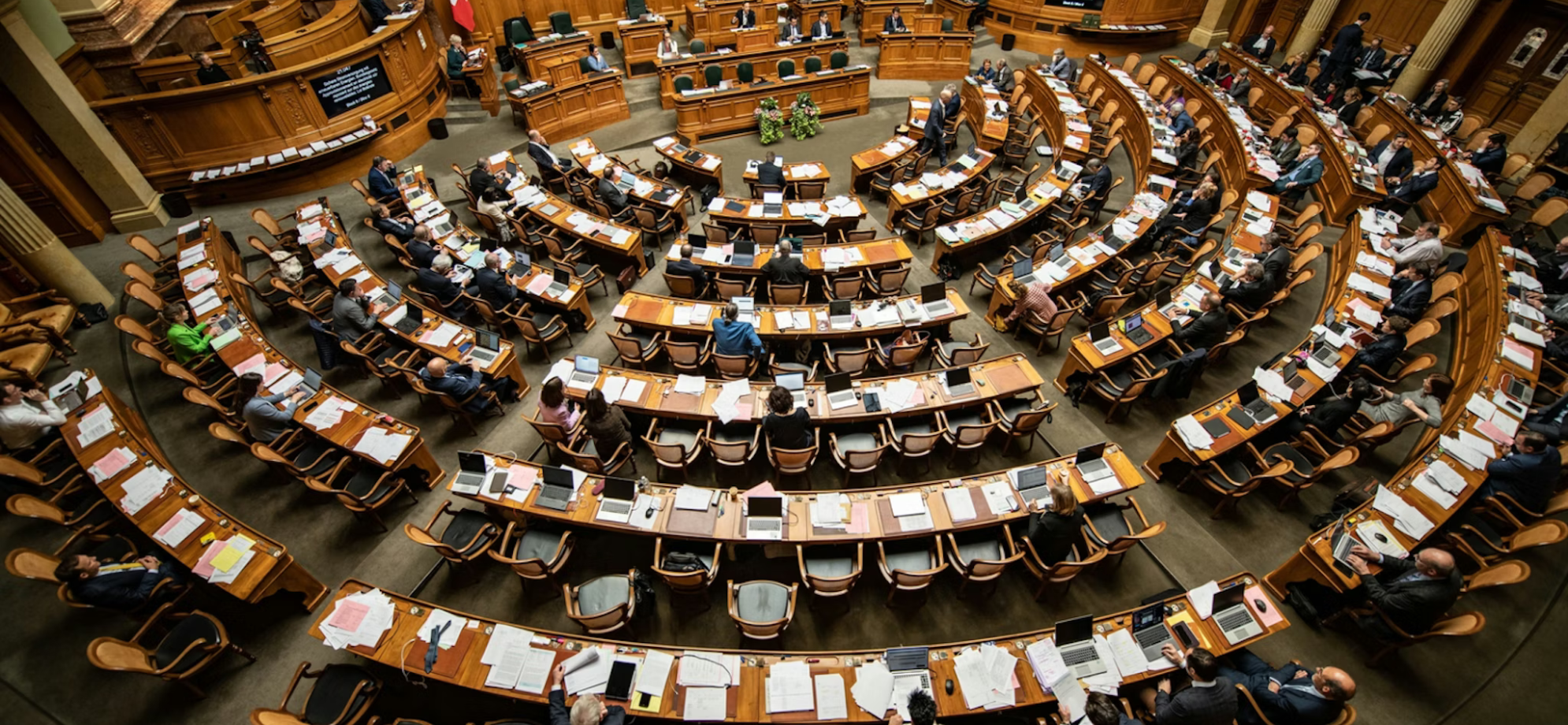
Three years later, while the shortage is worsening, teams are under pressure, and many professionals are leaving the profession, the National Council has weakened several key measures in the second phase of the initiative’s implementation.
This second phase was supposed to address one of the most urgent issues in the sector: working conditions.
And this is where the problem lies.
A difficult signal for care professionals to understand
The National Council refused to reduce the maximum weekly working time for nursing staff from 50 to 45 hours. It also refused to significantly improve compensation for work performed on Sundays and public holidays, keeping it at 25% instead of the 50% proposed by the Federal Council.
There are a few improvements: schedule changes will have to be announced at least four weeks in advance, instead of two, otherwise compensation will be required. Coffee breaks should also be recognized as paid working time.
But for many nurses and care professionals, these adjustments are not enough.
They do not address the reality on the ground: heavy schedules, frequent last-minute changes, constant mental load, chronic understaffing, and daily pressure that wears teams down over time.
The shortage is not inevitable. It is also the result of a system.
One of the arguments used against improving working conditions is well known: reducing the workload or better compensating certain hours would require more staff, at a time when staff are already lacking.
But this is precisely where the reasoning becomes circular.
If staff are lacking, it is also because working conditions are pushing many people to leave the profession. Because schedules are too intense. Because rest periods are insufficient. Because balancing professional and private life has become too difficult. Because vocation, no matter how strong, is no longer enough to compensate for exhaustion.
As Brigitte Crottaz, Socialist National Councillor from Vaud, pointed out:
“By 2029, our country will be short of tens of thousands of nurses.”
This figure should be a wake-up call for all of us.
We cannot solve a shortage by maintaining the very conditions that make it worse. We cannot ask younger generations to join care professions in large numbers while sending them the message that their quality of life will remain secondary. And we cannot build a strong healthcare system by relying on the exhaustion of those who keep it running.
Care professionals are not asking for privileges
The debate is sometimes framed as a trade-off between working conditions and cost control. As if we had to choose between treating care professionals better and preserving the system.
But this opposition is misleading.
Improving the quality of life of care professionals is not about granting a privilege. It is about protecting a vital resource of the healthcare system.
Exhausted, understaffed teams that are constantly reorganized at the last minute cannot sustainably deliver the best possible care. Fatigue increases the risk of errors. Lack of rest weakens professionals’ health. Unpredictable schedules affect personal life, parenthood, mental health, and long-term commitment.
On the contrary, more humane working conditions support retention, make the profession more attractive, stabilize teams, and ultimately improve the quality of care.
The cost of inaction is often less visible in the short term. But it is immense: absenteeism, turnover, reliance on temporary staff, loss of expertise, internal tensions, declining quality of care, and growing discouragement among teams.
Planning is a central lever
In this debate, planning is essential.
Schedules are not just an administrative detail. They structure the lives of care professionals. They influence fatigue, recovery, family life, perceived fairness, and the ability to stay in the profession over time.
A schedule can be legally compliant, but deeply unfair.
It can be complete on paper, but destructive for the team.
It can cover operational needs while still creating exhaustion, frustration, and resignations.
This is why planning must evolve.
It must become more predictable, more transparent, and fairer. It must better account for legal requirements, patient needs, required skills, but also the human realities of teams.
This does not mean making the system rigid to the point of becoming unmanageable. It means organizing better, anticipating better, and distributing constraints more fairly.
Last-minute changes should remain the exception, not the norm. Efforts must be visible. Compromises must be recognized. Weekends, nights, public holidays, and difficult shifts must be distributed fairly over time.
Respecting care professionals also means respecting the popular vote
The initiative for strong nursing care was accepted by the Swiss people in 2021. It was not only about training. It was also about making care professions sustainable.
The message sent by the nearly 60% of voters who supported the initiative was clear: the situation cannot continue like this. This message was recently reinforced by the 190,000 signatures handed over in Bern by care professionals and their supporters, calling for the immediate and full implementation of the initiative.
In hospitals, care homes, clinics, and home care services, teams are already under pressure. And when care professionals say they do not feel heard, this is not a political posture. It reflects their daily reality.
The quality of care depends directly on the quality of life of those who provide it.
It is time to change the logic
For too long, the system has relied on the implicit assumption that care professionals would hold on. Out of vocation. Out of a sense of duty. Out of solidarity with colleagues. Out of loyalty to patients.
But this logic has reached its limits.
Younger generations no longer want to sacrifice their health to do a job that is essential. And experienced professionals cannot indefinitely absorb the weaknesses of a system under pressure.
Improving the working conditions of care professionals is therefore not a luxury. It is not a secondary demand. It is not a comfort expense.
It is a healthcare, social, and organizational emergency.
At Healio, we are convinced that the future of care will also depend on a better way of organizing work: more human, fairer, more collaborative, and better adapted to the realities on the ground.
Because a strong healthcare system is not built only with infrastructure, funding, and technology.
It is built first and foremost with women and men who are able to care for others without exhausting themselves.
And today, they deserve better than half-measures.